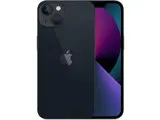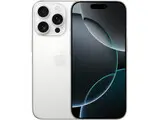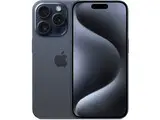
Every iPhone from the iPhone 5 onward uses a nano-SIM, the smallest physical SIM size, so a modern refurbished iPhone takes a nano-SIM or an eSIM. iPhone XS, XR, and later also support eSIM, and iPhone 14 and later sold in the United States drop the tray entirely and run eSIM only, as do iPhone 17 models sold in Canada. If the phone is unlocked, any compatible carrier's SIM will fit and work.
SIM sizes by iPhone model
| iPhone models | SIM type |
|---|---|
| iPhone 4 and 4S | Micro-SIM |
| iPhone 5 through iPhone 13, and iPhone 14 to 17 Pro sold outside the US (except the iPhone Air and Canadian iPhone 17 models) | Nano-SIM |
| iPhone XS, XR, and later | Nano-SIM plus eSIM |
| US iPhone 14 to 17, Canadian iPhone 17 and 17 Pro, and iPhone Air | eSIM only, no SIM tray |
In the US and Canada, the iPhone 17 and iPhone Air have no physical SIM tray, so you activate service entirely through an eSIM. In the UK, the iPhone 17 keeps a nano-SIM slot next to eSIM, according to Apple's UK specs, while the iPhone Air is eSIM only everywhere.
What about eSIM?
An eSIM is a digital SIM you activate from your carrier, with no physical card to insert. Most carriers now support it, and a single iPhone can hold more than one. There is more detail in can I use an eSIM on a refurbished iPhone.
Locked or unlocked?
A carrier-locked iPhone only accepts SIMs from its own network. An unlocked iPhone accepts any compatible SIM, which is the better pick if you might switch carriers. The distinction is covered in unlocked vs SIM-free, and you can check whether a phone is compatible with your carrier before buying.