- Noticeably better battery life, roughly 1.5 to 2 extra hours of screen-on time
- Faster A15 Bionic chip with greater headroom for future iOS updates
- Larger camera sensor captures 47% more light for stronger low-light shots
- Sensor-shift OIS, Photographic Styles, and Cinematic Mode
- Base storage starts at 128 GB instead of the 12 mini's cramped 64 GB
iPhone 12 mini vs. iPhone 13 mini: All the differences
Below is a category-by-category breakdown of how the two minis compare, from build quality and screen brightness to real-world battery endurance and long-term software support.
Design
Both the iPhone 12 mini and iPhone 13 mini share a compact, flat-edged design built from aerospace-grade aluminum with a Ceramic Shield front cover. Each model features the TrueDepth camera notch for Face ID, though the 13 mini's notch is roughly 20 percent smaller, a subtle but welcome refinement.
At 5.18 x 2.53 inches, they occupy the same footprint. The 13 mini is marginally thicker (7.65 mm vs. 7.4 mm) and heavier (141 g vs. 135 g) owing to its larger battery cell, but the difference is imperceptible in a pocket. One visual distinction: the 13 mini arranges its rear cameras diagonally rather than vertically, accommodating a bigger sensor module.
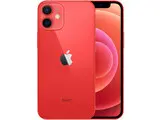
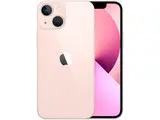
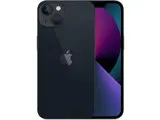
Color options differ between generations. The iPhone 12 mini shipped in Black, White, Red, Green, Blue, and Purple; the iPhone 13 mini introduced Midnight, Starlight, Blue, Pink, Red, and Green.
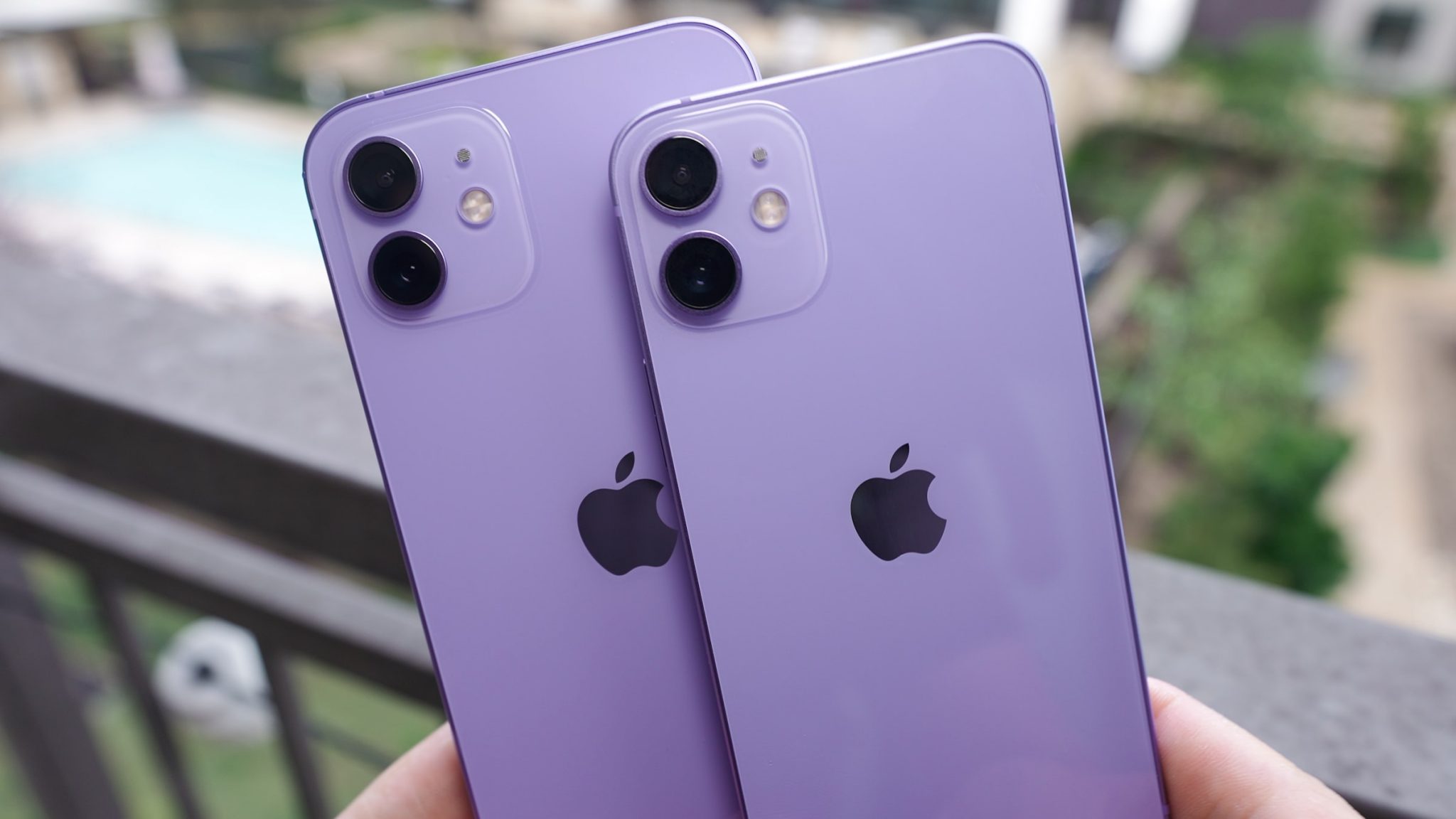
iPhone 12 mini
Display
On paper, both phones carry a 5.4-inch Super Retina XDR OLED panel at 2340 x 1080 pixels. Color accuracy, contrast ratios, and HDR support are excellent on each. The meaningful difference is brightness: the iPhone 13 mini peaks at 800 nits compared to the 12 mini’s 625 nits. That 28-percent jump makes a real difference when you are reading outdoors on a sunny day.
Both screens support True Tone, which adjusts white balance to match ambient lighting. Neither phone offers a high-refresh-rate display; that feature arrived with the iPhone 13 Pro line and above. For gaming, video streaming, or scrolling through photos, both panels deliver a sharp, vibrant experience.
The A15 Bionic inside the iPhone 13 mini outperforms the A14 Bionic in the 12 mini by a comfortable margin. Geekbench 6 scores running iOS 26 tell the story: the 13 mini posts roughly 2,300 single-core and 5,650 multi-core, while the 12 mini lands around 2,100 and 4,800 respectively.
For everyday tasks (messaging, browsing, social media), both phones feel snappy. The gap becomes apparent under load: video editing, graphically demanding games, and augmented-reality apps run more smoothly on the 13 mini, and its chip manages heat better during sustained workloads.
Both models carry 4 GB of RAM. The A15’s more advanced Neural Engine, however, powers on-device machine learning features such as Photographic Styles and Cinematic Mode that the 12 mini cannot access. The A15 also draws less power per task, which contributes directly to the 13 mini’s superior battery endurance.

iPhone 13 mini
Cameras
Both phones carry a dual 12 MP system (one wide lens, one ultra-wide), and in good daylight they produce nearly identical results. The differences emerge in challenging conditions and creative features.
The iPhone 13 mini inherited its main sensor from the iPhone 12 Pro Max. That larger sensor captures 47 percent more light, which translates to cleaner, brighter low-light photos with less noise. It also uses sensor-shift optical image stabilization: the entire sensor moves to counteract hand shake, rather than just the lens element. The result is steadier handheld video and sharper photos in dim environments.
On the software side, the 13 mini gains Photographic Styles, which let you set persistent tone and warmth preferences applied at capture time, and Cinematic Mode, which adds rack-focus transitions to video with a shallow depth-of-field effect. Neither feature is available on the 12 mini. For casual photography the 12 mini remains very capable, but the 13 mini offers a measurably stronger toolkit for low-light shooting and creative video work.
Battery life and charging
Battery life is the single biggest reason to choose the 13 mini over the 12 mini. A larger cell (2,438 mAh vs. 2,227 mAh) combined with the A15’s better power efficiency yields a substantial real-world difference.
Apple rates the iPhone 13 mini at up to 17 hours of video playback, two full hours more than the iPhone 12 mini’s 15 hours. In daily use, reviewers and owners consistently report 1.5 to 2 extra hours of screen-on time with the 13 mini. That is often the difference between a phone that lasts comfortably until bedtime and one that needs a top-up by late afternoon.
Both phones support 20 W wired fast charging (reaching 50 percent in about 30 minutes), MagSafe wireless charging at up to 12 W, and standard Qi wireless charging at up to 7.5 W. Keep in mind that a refurbished unit’s battery health may vary; look for sellers that replace or certify the battery above 80 percent capacity.
Software longevity and Apple Intelligence
Both the iPhone 12 mini and iPhone 13 mini run iOS 27, which Apple announced at WWDC on June 8, 2026 and released on September 14, 2026. iOS 27 supports every device iOS 26 supported, with nothing dropped. Apple typically supports iPhones for six to seven years, which means iOS 27 could be the last major update for the 12 mini (released October 2020), while the 13 mini (released September 2021) is expected to receive updates through 2028 or 2029. That extra year of software support is a meaningful advantage if you plan to keep your phone long-term.
One important limitation: neither the iPhone 12 mini nor the iPhone 13 mini supports Apple Intelligence, the suite of on-device AI features Apple launched alongside iOS 18. Apple Intelligence requires at least an iPhone 15 Pro or later. If access to Apple's generative-AI tools is a priority, you will need to look beyond the mini line entirely.